Newsletter #9
Dear reader,
The Programme on Social Safety in Higher Education and Science has experienced a busy period this spring, including the opening of a new grant round and several networking events. We would like to keep you informed of these developments and therefore share the latest updates in this newsletter:
- Registration open: Conference Rules and Reality (5 October 2026)
- Reminder: 2026 grant application round
- Article: Social safety does not emerge on paper: Between good intentions and a stubborn reality
- Networking meetings in Eindhoven and Utrecht
- Exploration of a knowledge and expertise centre on social safety
- Recap: Masterclass D&I by Saniye Çelik
- Project in the spotlight: Rotterdam University of Applied Sciences
- An item from our portrait series
Kind regards,
On behalf of the Steering Committee,
Ineke van Halsema and Arne Römgens
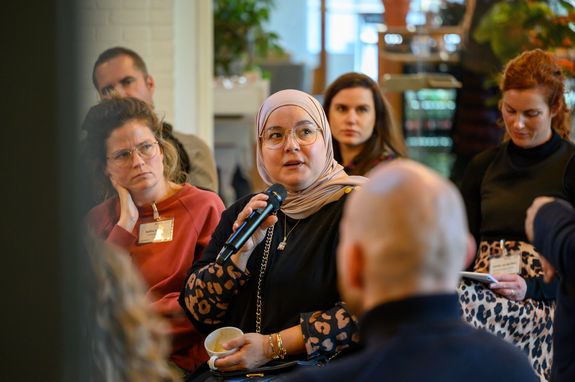
Invitation: Conference on Social Safety in Higher Education and Science – 5 October 2026
Rules and Reality
The second edition of the Conference on Social Safety in Higher Education and Science will take place on Monday, 5 October 2026. As last year, the conference will be held at the Prodent Factory in Amersfoort and will run from 13:00 to 17:30.
The full programme will follow at a later stage, but the theme has already been announced: Rules and Reality. Rules are essential for creating a socially safe working and learning environment and are ideally supported from the bottom up. However, a gap can exist between written rules and their implementation in practice: regulations are not always followed in practice and do not always originate from practice. Moreover, regulations often focus on handling complaints and reports, while the preventive side of social safety remains underexposed.
A socially safe culture in higher education, science, and student life requires more than just rules: it calls for shared responsibility, open dialogue, and an environment in which people feel heard and respected. Regulations are intended to drive this cultural change, but they may (seriously) fall short in situations involving abuse of power.
During the conference, we will therefore explicitly focus on addressing “frictional structures” and will work together to bridge the gap between policy and practice.

Reminder: 2026 Grant Application Round
The grant application round is still open until 16 April 2026, 13:00. If you are currently preparing an application, please make sure to submit it before the deadline. If you have any questions about your project, please send them well in advance of the deadline to programmasecretaris@regiegroepsocialeveiligheid.nl.
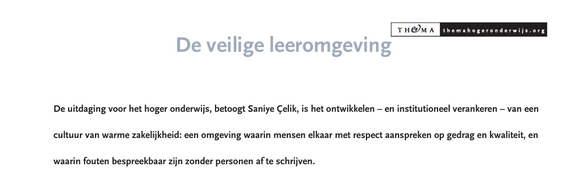
Social safety does not emerge on paper: Between good intentions and a stubborn reality
Deze maand verscheen in TH&MA een artikel van Saniye Çelik over de kloof tussen beleid en realiteit wat betreft sociale veiligheid in het hoger onderwijs. De uitdaging voor het hoger onderwijs, betoogt Çelik, is het ontwikkelen – en institutioneel verankeren – van een cultuur van warme zakelijkheid: een omgeving waarin mensen elkaar met respect aanspreken op gedrag en kwaliteit, en waarin fouten bespreekbaar zijn zonder personen af te schrijven. Dit artikel sluit natuurlijk goed aan bij het thema van de conferentie: Regels en Realiteit.

Networking Meetings in Eindhoven and Utrecht
Following the success of the meeting in Delft, the Steering Committee also organized networking meetings in Eindhoven and Utrecht in March. Participants in these sessions provided valuable input for the Steering Committee’s grant application, which has now been submitted.
In addition, Henny van Alphen shared insights from the Integrity & Social Safety Programme of TU Eindhoven, and in Utrecht, Lidwien Poorthuis from the National Network of Women Professors (LNVH) presented the Monitor Women Professors 2025.
Project in the Spotlight | Making Space for Difference: A Dialogical Approach to Social Safety
In this series, we highlight the projects that have received funding from the Steering Committee. This time, we feature a project from: Institute for Social Studies – Rotterdam University of Applied Sciences.
What is this project about?
“Within our Social Work programme, we notice that conversations about difference, identity, and exclusion can sometimes be challenging. Students do not always feel heard or seen, and lecturers sometimes feel ill-equipped to act in tense situations. With this project, we are creating structural space for dialogue: we train teaching teams in dialogical skills, develop classroom methods, and organize intergenerational conversations between students and lecturers.
The Social Work programme functions as a magnifying glass for other programmes: because issues of justice, inclusion, and power are explicitly embedded in the professional code of social work (IFSW, 2018), tensions become visible more quickly.”
Exploration of a Knowledge and Expertise Centre on Social Safety
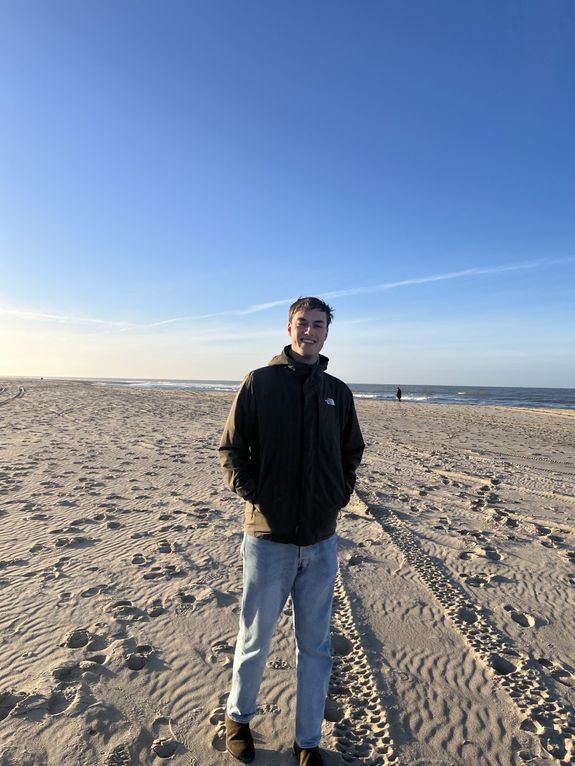
“Sport should bring people together and provide enjoyment. Safety should never be compromised.”
In this portrait series, we highlight the people behind the scenes who are committed to creating a socially safe study and working environment. Today: Leon Hovenkamp, confidential contact person at ACLO Student Sports Groningen, the umbrella student sports organization in Groningen.
Why are you committed to social safety?
“Sport plays an important role in my life. I have personally experienced how sport can bring people together, provide enjoyment, and form the basis for friendships. It is precisely these positive aspects that should be central. Undesirable behaviour or unsafe situations undermine this. I want to contribute to ensuring that students enjoy sport as much as I do.”

Research into the Effectiveness of Interventions
In 2026 and 2027, a study commissioned by the Steering Committee will be conducted on the effectiveness of interventions in the field of social safety in higher education and science. The study is led by Leonie Heres of Vrije Universiteit Amsterdam and Quirine Eijkman of Utrecht University of Applied Sciences.
The research will begin with a literature review on the effectiveness of social safety interventions and will subsequently follow and analyse four interventions funded by the Steering Committee. The aim of the study is to gain insight into which social safety interventions show promise within higher education and science, what effects can be expected, and how these interventions function in practice.
The research will not only generate academic insights but also provide concrete practical guidance and transferable outputs that can be shared across the sector.
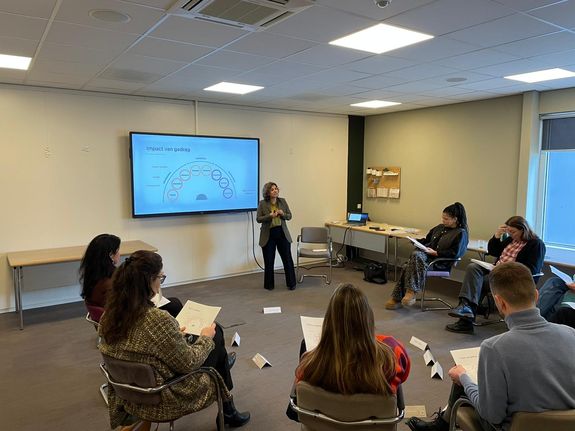
Recap: Masterclass D&I by Saniye Çelik
On Wednesday, 18 February, the Steering Committee organized a D&I masterclass. Saniye Çelik, endowed professor of Diversity and Inclusion at Leiden University and member of the Steering Committee on Social Safety, explored together with participants what diversity, inclusion, and social safety mean in higher education and science, and how one can consciously contribute to these in practice.
Participants completed the inclusion scan in advance and, during the session, engaged in discussions based on their personal reports about their strengths and areas for development in the field of inclusion. In this way, the masterclass provided new insights for strengthening inclusion and social safety in the participants’ educational environments.