Newsletter #8
Dear reader,
The Social Safety programme has kicked off the new year full of energy. We would like to keep you informed of all developments and are therefore sharing the latest updates in this newsletter:
-
Funded projects 2025
-
Changes to the 2026 grant scheme
-
Recap of grant scheme information sessions
-
Network meetings: “Learning together & working together”
-
Recap of the LTAY board meeting
-
Portrait series: Juliëtte Heikens
Kind regards,
On behalf of the steering committee,
Ineke van Halsema and Arne Römgens

Funded projects grant scheme 2025
The assessment process for the 2025 grant round has been completed and the funded projects have started. Examples of approved applications include research projects, dialogue sessions, e-learning programmes, training courses, toolkits and roadmaps. Click below for a brief summary of all funded projects. We will continue to monitor these projects and will regularly highlight a selection of them through LinkedIn and our newsletter.

Changes to the 2026 grant scheme
In 2026, universities, universities of applied sciences, and student, employee and PhD organisations will once again be eligible for funding to strengthen social safety in higher education and research. Compared with 2025, the grant scheme has been changed in several respects. The main changes are:
- In 2026 there will be only one grant round: submissions are open from 16 March, 9:00 a.m., until 16 April, 1:00 p.m.
- In 2027 there will also be only one grant round: submissions are open from 12 January, 9:00 a.m., until 12 February, 1:00 p.m.
- For the budget, applicants can choose from four roles with fixed hourly rates, making it easier to compile the budget.
- PhD, employee and student organisations may also apply if they are funded by a municipality.
- The assessment framework has been adjusted in several areas.
A summary of the grant scheme, including links to the new budget format and the updated assessment framework, can be found through the link below.
Recap of grant scheme information sessions
Last week, we organised three information sessions to help you prepare for submitting a grant application. The sessions were well attended, and we would like to thank you for your engagement and questions. A recording of the session from Monday 9 February can be found on Youtube. The slides from the presentation are also available as download.

Network meetings: “Learning together & working together”
This spring we are organising a number of network meetings for professionals in higher education. The first in a series of three network meetings took place on Tuesday 10 February at TU Delft and led to many interesting and substantive discussions. First, the programme team presented project ideas for 2026, gathering useful input to strengthen these initiatives. TU Delft then shared their process for improving social safety across the organisation with bottom-up support. Two good practices that exemplify the Delft team’s approach are the development of a code of conduct and the establishment of a reporting point.
Want to learn more about these initiatives and TU Delft’s approach? Contact Olivier Sueur (manager, Integrity Office TU Delft): o.sueur@tudelft.nl.
Recap of the Let’s Talk About YES board meeting
On 19 January, a meeting on social safety was hosted by Breda University of Applied Sciences (BUas) with board members and their representatives. This annual meeting originated from the Let’s Talk About YES (LTAY) manifesto, an Amnesty initiative aimed at putting sexual safety on the agenda in higher education. The steering committee has taken over the organisation of the annual meeting and continues to discuss sexual and social safety with higher education administrators.
During the meeting, the steering committee presented its activities and plans, and Maastricht University provided an update on e-modules to prevent sexually inappropriate behaviour, which are being developed and implemented through a collaboration of eight universities and universities of applied sciences. BUas then shared valuable insights into its approach to social safety. This was followed by an update from the Ministry of Education, Culture and Science (OCW) on incorporating the duty of care for students into the Higher Education and Research Act (WHW). Overall, it was informative to exchange experiences, insights and dilemmas on these topics at the governance level. It was agreed to organise a similar meeting again next year.
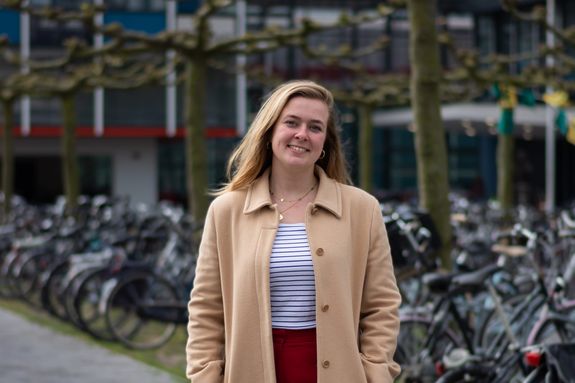
Portrait series: Juliette Heikens
In this portrait series, we highlight the people behind the scenes who work to create a socially safe study and work environment in higher education and research. Today: Juliette Heikens, integrity advisor and coordinator of the Integrity and Social Safety Reporting Point at TU Delft.
Why do you commit yourself to social safety?
“Social safety is, for me, a precondition for being able to work and study with enjoyment. Even in a safe environment, things can go wrong—people sometimes unintentionally cross boundaries or fail to understand each other’s perspectives. What matters is that you learn from this, take responsibility, and try together every day to do better. This collective effort motivates me. I see that we can make a real difference in this.”